I consider myself a bit of an audiophile, but I don’t particularly enjoy listening to music through headphones, especially closed, sealed ones. With them, the soundstage feels almost nonexistent — the music plays as if inside your head, creating a pressuring effect.
Still, I was looking for a solution for casual music listening while working outside the room where my Hi‑Fi system is located. At first, I used Bluetooth speakers like the UE Megaboom or JBL Xtreme 2, always in pairs via TWS, to achieve a more spacious and filling sound. They worked well outdoors, but indoors they were inconvenient — especially when moving between rooms, since I had to carry the speakers around. Small rooms also introduced the problem of standing waves, where certain frequencies (particularly low ones) resonated with the room and became boomy or muddy.
Eventually, I grew tired of all this and decided to look for wireless earphones that could replace Bluetooth speakers — delivering a spacious, non‑fatiguing sound with noticeable bass, while remaining compact, comfortable, not sealing the ear canal, and so light that they feel almost like wearing nothing at all.
And I found them: Kiwi Ears Spark — they meet all these requirements!
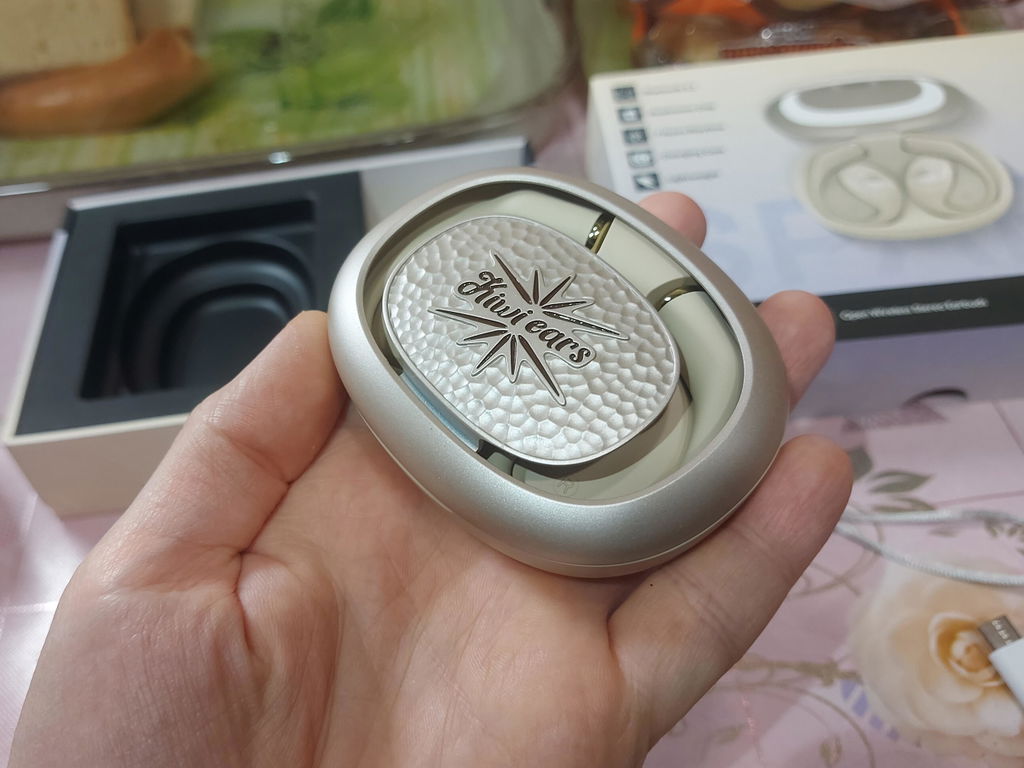
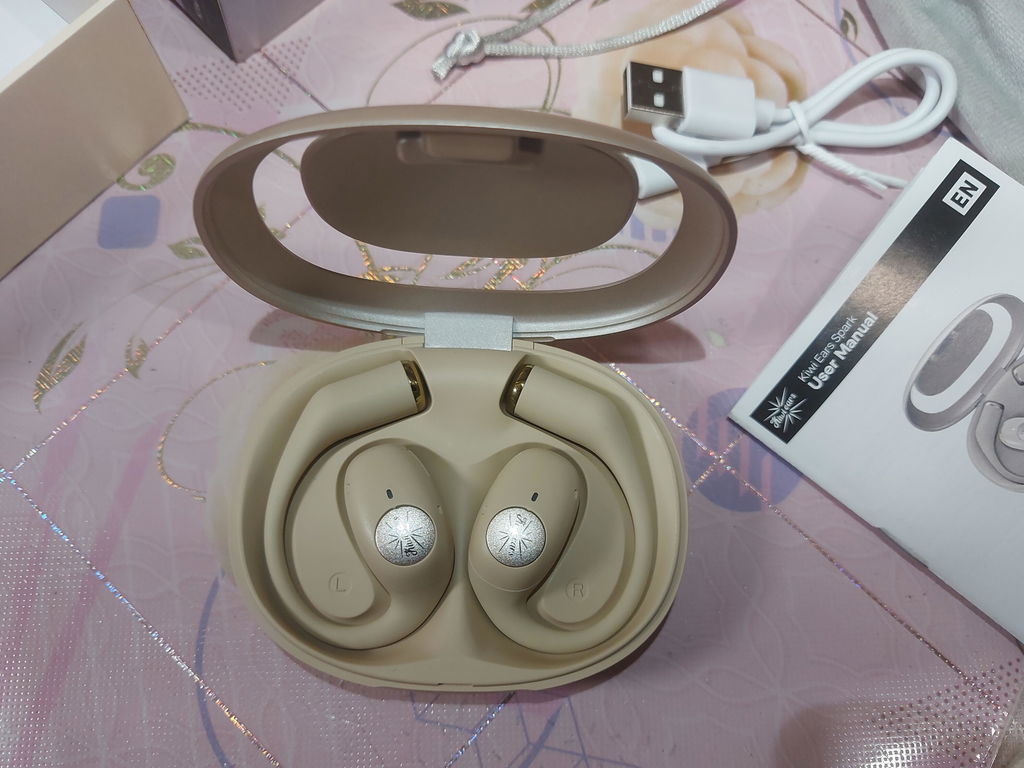
I really like their design, especially the case. It feels great in the hand, and opening the lid is like opening a seashell with two pearls inside — a very pleasant sensation. However the window in the case lid could ideally be covered with transparent glass to prevent dust or sand from entering… but perhaps this open window is exactly what gives the case its seashell‑and‑pearls aesthetic.
As for the sound and tonal balance, it is quite good considering the type of headphones, and the aptX codec brings the detail closer to wired performance. A word of caution: these are not designed for dense, bass‑heavy sound. They are more suited for background listening while you are busy with other tasks. Indeed, the sound is light and non‑intrusive, never fatiguing, yet bass is still audible down to 30 Hz. Of course, the frequency response drops sharply at 30 Hz, but you can still hear a hint of it — something Bluetooth speakers often fail to deliver. And for news and podcasts, these earbuds are simply perfect.
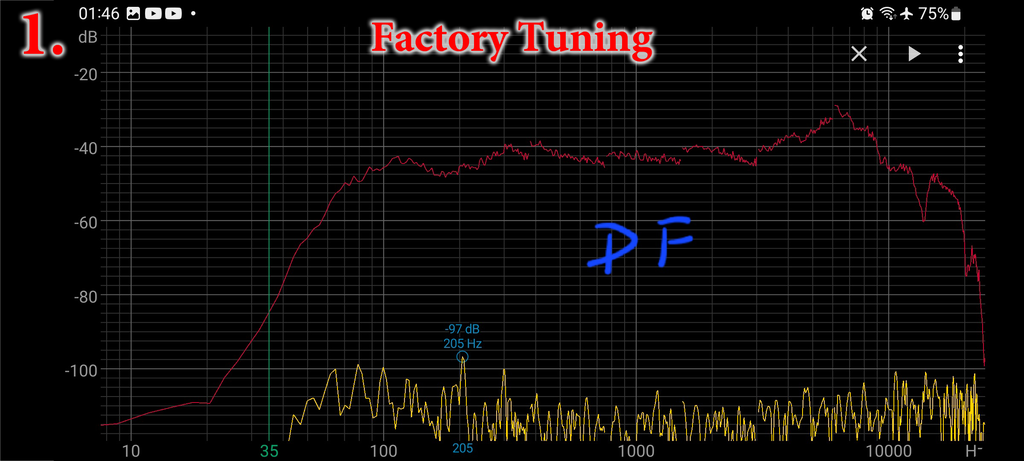
And I noticed that the factory tuning of the tonal balance is better suited for podcasts, while the musical potential is not fully realized in my opinion. I attached a screenshot of the frequency response curve I measured myself using the Spectroid app on my smartphone. A significant peak around 6–7 kHz makes the headphones a bit piercing at high volumes. When tuning audio systems, I always strive to make the frequency response as flat as possible. So here, too, I tried to smooth it out using the Toneboosters parametric EQ inside the USB Audio Player PRO app, which I always use for music playback.
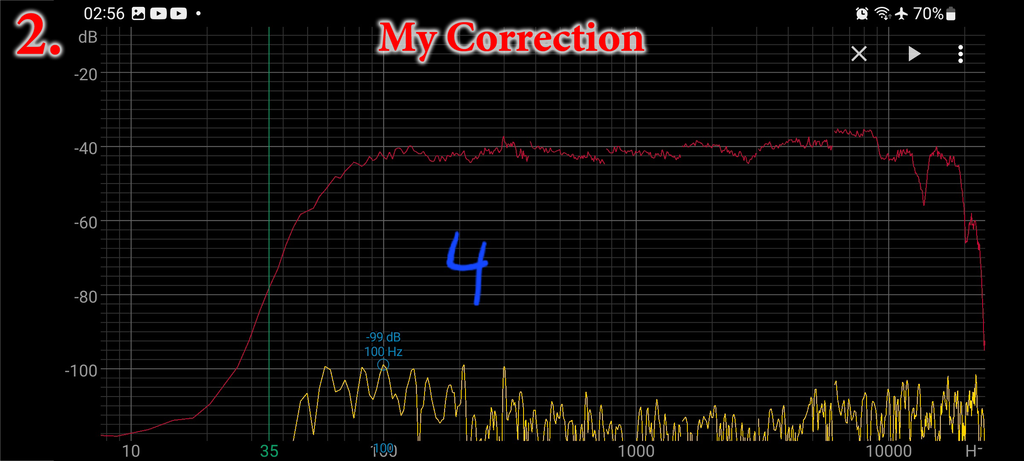
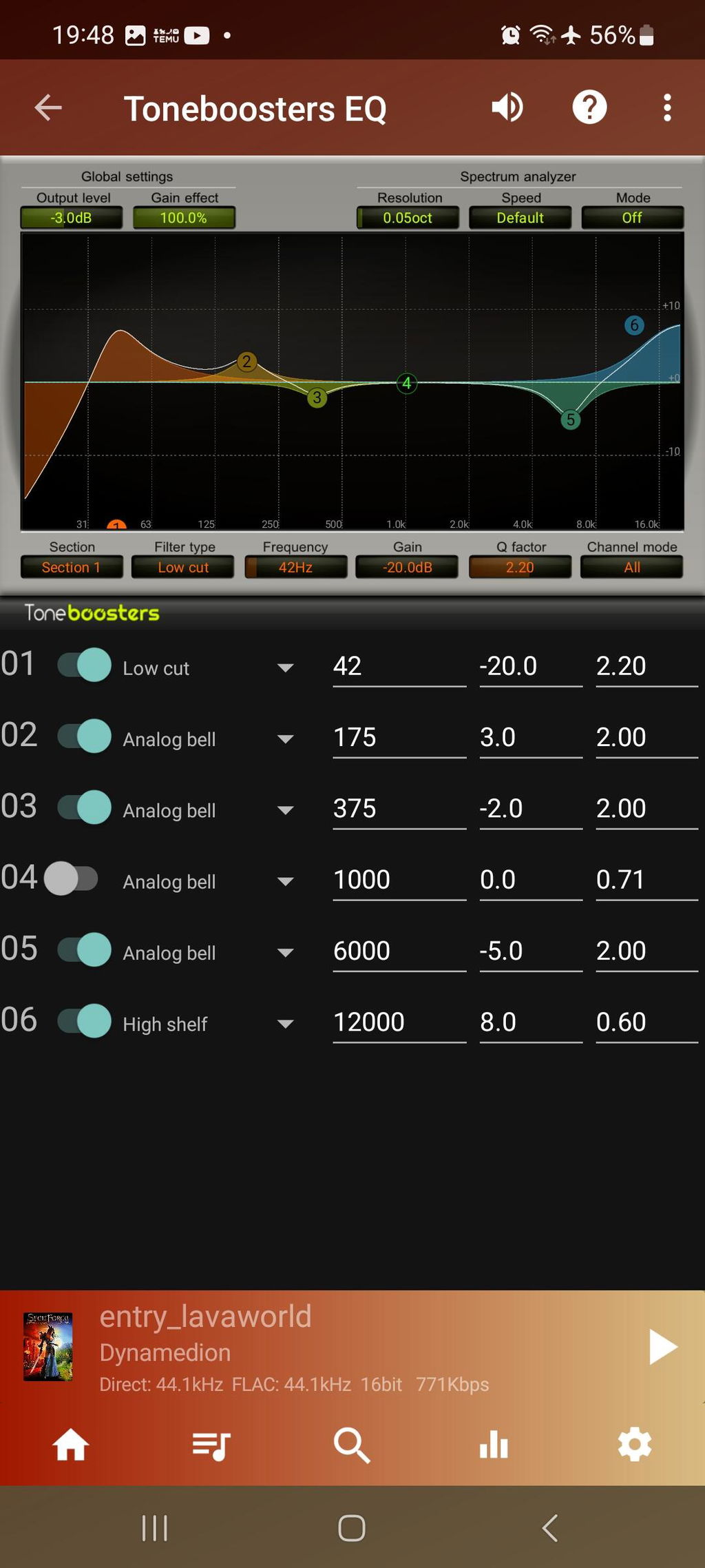
I also attached a screenshot of my final EQ settings and the resulting frequency response. If you use this player, you can apply the same settings and compare them with the stock sound. Personally, I feel my correction improved the sound: I reduced the shoutiness, added some bass around 40–50 Hz, cut the sub‑bass below 30 Hz (which these earbuds cannot reproduce anyway), and lifted the treble. The result is a more even perception of the entire frequency spectrum. The ear is no longer irritated at high volumes by the boosted 6–7 kHz region, so you can turn the music up louder and immerse yourself more deeply in the performance.
Note:
As you can see in my EQ settings, I lowered the overall Output Level by –3.0 dB. Without this, in some loud tracks at peak moments, the player’s engine may clip due to boosted frequencies in EQ. Lowering the output level by –3 dB also reduces the maximum volume of the headphones, but for home listening this reduction will still provide enough volume.