



Yanyin Baker Review – 6BA + 2 Planar, No Dynamic Driver, And It Still Rumbles
The Yanyin Baker ($499) skips the dynamic driver entirely, running six balanced armatures and two micro-planar drivers instead. On paper it's an...
Read story
11.11
26 Oct – 15 Nov 2026 (GMT+8)
Coming soon Reservation CardsPay $1, get $25 off | 26-29 Oct
 Jade $1 Reservation Card10% off the new ZiiGaat x B_Media Jade
 7HZ x Crinacle Zero: 2Dynamic Driver
From $24.99 USD
 Tripowin ZonieAudio Cable
From $11.47 USD
 7HZ Salnotes ZeroDynamic Driver
From $20.99 USD
 SIMGOT EW300Dynamic Driver + Planar + Piezoelectric
From $79.99 USD
 TANGZU Wan'er S.GDynamic Driver
From $19.00 USD
 Kiwi Ears CadenzaDynamic Driver
$34.99 USD
 KZ ZS10 ProDynamic Driver + Balanced Armature
From $49.99 USD
 SIMGOT EM6LDynamic Driver + Balanced Armature
$124.99 USD
 Tripowin GranViaAudio Cable
From $36.75 USD
 Kiwi Ears x B_Media: TerrasAudio Cable
From $45.99 USD
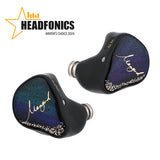 XENNS Mangird Tea PRODynamic Driver + Balanced Armature
$359.00 USD
 Tripowin C8Audio Cable
From $16.65 USD
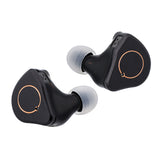 SIMGOT SuperMix 4Dynamic Driver + Balanced Armature + Planar + Piezoelectric
$169.99 USD
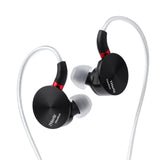 7HZ TimelessPlanar
$199.99 USD
Verdict
The Inawaken Twilight DS are clearly a fun and punchy set of iems and for $349, represent some seriously good value.
They get a big tick of approval from me – I’m struggling to find any negatives.
I thought at the very first listen they may become fatiguing quickly, but I was wrong. That treble detail never got harsh or sibilant to my ears.
I am paid to write this review, but it has no bearing on what my outcome will be – check out my other reviews too.

Written by Andrew Barlow
The Inawaken Twilight DS ($349) is a textbook example of "let’s throw the entire parts catalogue into a shell and see if it explodes”. Boasting a staggering 12-driver layout per ear (4 dynamic drivers and 8 balanced armatures), this absolute unit of an in-ear monitor (IEM) somehow shifts between a technical microscope and a subterranean subwoofer.
The first song I listened to on it, a huge smile spread across my face……but let’s not get carried away……
Here is a detailed, technical, and slightly unhinged breakdown of what happens when you cram an acoustic block party into your ear canals.
Thanks to Linsoul for sending these out for review – let’s get stuck in.

The Anatomy: Engineering or Mad Science?
If an acoustic engineer suffered a feverish nightmare after reading a textbook on fluid dynamics, they would build the Twilight DS. Inside the high-precision, CNC-machined aluminium alloy shells, Inawaken didn't just put a bass driver—they packed in a quad-coaxial, dual-opposed, push-pull isobaric configuration.
What the heck does that mean??? In plain English, that means four distinct dynamic drivers are mounted face-to-face like an angry acoustic tug-of-war team, fighting to compress the air inside a sealed sub-chamber. It is highly complex, entirely unnecessary for casual listening, and wonderful to look at under an X-ray.
To complete the overkill, they crammed eight balanced armatures into the remaining space: four for the midrange frequencies and four handling the treble. Every single cluster of these drivers fires into independent sound tubes cut to hyper-precise lengths. They act as literal Helmholtz resonators to tune out harsh frequencies, making your ears the target of complex acoustic physics just to play Spotify tracks. Everything runs through an intricate four-way crossover board that has an anti-static tape cover—because God forbid your static sweater shock your eardrums with 120 decibels of electricity.
Ergonomics and Accessories: A Mixed Bag
These look gorgeous in my opinion. I did have to look up Damascus steel (I’d heard of it in the chef world). I think it’s probably Damascus steel copy, as real Damascus has naturally occurring patterns from the process. These have been drawn on somehow. I love the blue ring around the faceplate too. There’s good weight to these but they’re not to chunky or heavy.
Open the decent sized box and it’s rather premium packaging. The iems are attached to a really nice looking thick silver braided cable that only terminates in 4.4mm, no modularity. It’s perfect for me but others might like a 3.5mm end as well. There’s 2 boxes of nice tips – wide bore and wider bore. I tried both. I preferred the slightly less wide bore grey and yellow ones. I’ll explain in the sound section.

Finally, we get a rather unusual hard leather blue case. Looks great from the outside but open it up and it’s not fully open. The opening hole is cut off on both sides and at the bottom. I don’t think I understand the design. But it’s quality regardless.

For $349 it is just as I would expect with regards to accessories and packaging.
So how do they bloody Sound? Earthquake Down Low, Lab Tech Up Top
I used my NiPO N2 Dap for all

Tuning an IEM with 12 drivers is usually a recipe for a muddy disaster, but the Twilight DS defies the odds with a remarkably clean, technical, and slightly quirky presentation.
The Bass (The 'Earthquake' Effect): Thanks to that isobaric quad-DD configuration, the sub-bass depth and rumble are addictive. It reaches down into the low-frequency abyss and vibrates your skull. However, the mid-bass punch is pulled back significantly. If you want a punchy kick drum that slams you in the chest, this isn't it. It's less "boxing glove to the jaw" and more "tectonic plate shifting under your house".
The Midrange (Clean and Balanced): The four mid-frequency BAs serve up crisp transients, exceptional layering, and great micro-detail. It’s a well balanced midrange to my ears with vocals present and full and guitars and pianos sounding like….well, guitars and pianos. Not forward and definitely not recessed. And instruments separate beautifully.
The Treble (The Sparkle Microscope): The upper registers are highly detailed, energetic, and airy. The Twilight DS introduces a slight treble boost to force hidden details into the open. It is excellent for tracking complex cymbal strikes, though bad audio masters have nowhere to hide—it highlights recording distortion like a neon sign.
On Cyndi Lauper’s colab with Cyril and Tones & I, bass goes subwoofer deep and it’s clean and powerful. Vocals from both women are natural, forward and lush. And I can hear every last drop of treble information but it’s not sibilant.
I tried both tips and the wider bore removed some of that treble information which wasn’t bad per se, but it left them sounding a bit “wrong” to my ears. It left something behind. The grey and yellow offer more resolution and nothing seems missing on these.
On Haute and Freddy’s Film Noir, the bass beat again hits hard. These are almost bass canons. Again, cymbal hits and synth taps are bright and sparkly but never sibilant. They remain on the right side of harsh for me.
And vocals are again well presented and in my face but not shouty or honky. These focus well on female vocals, giving body and texture.
Next up, aural chaos with Machine Head’s Sutures. It’s a frenetic maelstrom and the Twilights actually handle the pandemonium very well. This level of disarray can cause a muddy, bleeding mess on any poor headgear but the Twilights actually separate out the aural mess with aplomb. Impressive.
And they stage very well too, particularly laterally. I’m not getting much height at all, and even depth isn’t huge but width-wise, they really do excel. And they throw images out into that stage very well also.
On Kacey Musgraves’ Weekend In Texas, this is a hoot on the Twilights. Kacey is forward, natural, full with great body and timbre. It’s a Country Dance Boot-Scootin’ ditty and she sounds bloody great. I can again hear every detail up top and there’s a really nice warmth down low. The bass is more subdued here but it’s still punchy and full.
Finally, another cracker of dance number – Kygo and Ava Max’s Before You Know It (a sample of Jess Glynne’s Hold My Hand).
This is just plain fun on the Twilights. Bass just rumbles clean and low. Ava Max sounds lively, full and in command. Synth is resolving – it’s hyper detailed and instruments are spread out wide, left to right. The Twilights aren’t genre specific but dam they sound exciting on EDM/Dance/Pop, anything with a powerful beat and tons of information up top!

Comparison Time
For this price and style, I’ll pull out my beloved Tipsy M5s. They retail for $399 USD, and utilise 5 drivers (1 BC, 1 DD, 2 BA and 1 Planar) and also use a 4-way crossover network.
Regarding bass, the Twilight DS relies on brute-force air compression from its face-to-face quad-isobaric drivers to deliver a massive, skull-vibrating subterranean rumble. Conversely, the Tipsy M5s use a 10mm bone conduction driver to physically vibrate your inner ear cartilage, transforming what looks like a lean, neutral bass graph into a highly tactile, immersive, and richly textured low-end experience that never muddies the mix.
Both have great quality bass, but the sheer energy and power goes to the Twilights for me.
As for treble and detail, the Twilight DS uses a sharp, energetic treble boost to force micro-details forward, acting like a harsh critic that can make poorly mastered tracks sound painfully sharp. In contrast, the Tipsy M5 delivers excellent detail smoothly and naturally through reference-grade neutrality and zero distortion—using its planar and dual-BA drivers to uncover textures with organic warmth rather than forced brightness.
Both come out smelling like roses here, I love both styles equally.
Regarding staging and imaging, the Twilight throw out a huge wide stage. The M5s offer a more rounded platform but with less lateral width. This goes down to personal preference and song choice.
Overall, both are just wonderful! Choose the Inawaken Twilight DS if you want an aggressive, energetic but highly resolving listen, demand massive sub-bass physical air pressure, and prefer a hyper-wide horizontal stage for mapping out surgical transients.
Choose the Tipsy M5s if you prefer a natural, fatigue-free reference tuning, want a truly three-dimensional holographic stage, and want to experience the unique tactile sensation of bone-conducted sub-bass.
It really does come down to personal preference – I love both!

Verdict
The Inawaken Twilight DS are clearly a fun and punchy set of iems and for $349, represent some seriously good value.
They get a big tick of approval from me – I’m struggling to find any negatives.
I thought at the very first listen they may become fatiguing quickly, but I was wrong. That treble detail never got harsh or sibilant to my ears.
I am paid to write this review, but it has no bearing on what my outcome will be – check out my other reviews too.
The Yanyin Baker ($499) skips the dynamic driver entirely, running six balanced armatures and two micro-planar drivers instead. On paper it's an...
Read storyThe Diablo is exactly what it says on the tin: a basshead's planar that doesn't sacrifice coherence to get there. Sub-bass and...
Read storySo what’s the verdict???? But seriously, for $80, I’m actually very impressed. It looks and feels great, fits well and has a...
Read storyCommunity
Linsoul was founded in 2016 by Crazy HiFi team with the intention of providing world class customer service to the audiophile and music loving communities.
 Announcements🚀 Kiwi Ears Halcyon – World’s First MEMS Tribrid IEM Coming to Kickstarter (April 2026)
 AnnouncementsTHIEAUDIO Cypher Giveaway Ends 2 March – Don’t Miss the Kickstarter Launch!
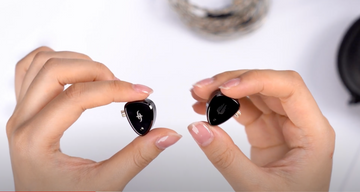 UnboxingSimgot EM6L Unboxing and Impressions
 ReviewsCan Damascus steel cut through the aural abyss?? Inawaken Twilight DS
 GuidesHow to Wear In-Ear Monitors Correctly


Comments (0)
No comments yet.