



7Hz x Crinacle Diablo Review
The Diablo is exactly what it says on the tin: a basshead's planar that doesn't sacrifice coherence to get there. Sub-bass and...
Read story
11.11
26 Oct – 15 Nov 2026 (GMT+8)
Coming soon Reservation CardsPay $1, get $25 off | 26-29 Oct
 Jade $1 Reservation Card10% off the new ZiiGaat x B_Media Jade
 7HZ x Crinacle Zero: 2Dynamic Driver
From $24.99 USD
7HZ x Crinacle Zero: 2Dynamic Driver
From $24.99 USD
 Tripowin ZonieAudio Cable
From $11.47 USD
Tripowin ZonieAudio Cable
From $11.47 USD
 7HZ Salnotes ZeroDynamic Driver
From $20.99 USD
7HZ Salnotes ZeroDynamic Driver
From $20.99 USD
 SIMGOT EW300Dynamic Driver + Planar + Piezoelectric
From $79.99 USD
SIMGOT EW300Dynamic Driver + Planar + Piezoelectric
From $79.99 USD
 TANGZU Wan'er S.GDynamic Driver
From $19.00 USD
TANGZU Wan'er S.GDynamic Driver
From $19.00 USD
 Kiwi Ears CadenzaDynamic Driver
$34.99 USD
Kiwi Ears CadenzaDynamic Driver
$34.99 USD
 KZ ZS10 ProDynamic Driver + Balanced Armature
From $49.99 USD
KZ ZS10 ProDynamic Driver + Balanced Armature
From $49.99 USD
 SIMGOT EM6LDynamic Driver + Balanced Armature
$124.99 USD
SIMGOT EM6LDynamic Driver + Balanced Armature
$124.99 USD
 Tripowin GranViaAudio Cable
From $36.75 USD
Tripowin GranViaAudio Cable
From $36.75 USD
 Kiwi Ears x B_Media: TerrasAudio Cable
From $45.99 USD
Kiwi Ears x B_Media: TerrasAudio Cable
From $45.99 USD
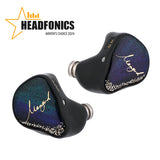 XENNS Mangird Tea PRODynamic Driver + Balanced Armature
$359.00 USD
XENNS Mangird Tea PRODynamic Driver + Balanced Armature
$359.00 USD
 Tripowin C8Audio Cable
From $16.65 USD
Tripowin C8Audio Cable
From $16.65 USD
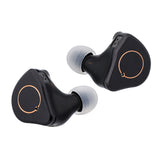 SIMGOT SuperMix 4Dynamic Driver + Balanced Armature + Planar + Piezoelectric
$169.99 USD
SIMGOT SuperMix 4Dynamic Driver + Balanced Armature + Planar + Piezoelectric
$169.99 USD
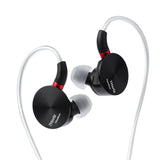 7HZ TimelessPlanar
$199.99 USD
7HZ TimelessPlanar
$199.99 USD
The Twilight-DS is Inawaken's second release and already a flagship-level statement, a 4DD+8BA hybrid built around a coaxial quad-dynamic bass module. The subbass is the star of the show, deep, textured, and controlled, while the mids and treble stay clean and technical without turning sterile. Midbass punch is the only real letdown, but for $349 the separation, imaging, and overall technicalities punch well above the price

Review by Yee Wei
General / Packaging / Build / Comfort
Inawaken isn't a brand I'd heard much about until the Dawn-Ms showed up — a fifty-dollar single DD set that punched way above its price bracket. So when the Twilight-DS landed on my desk, I honestly didn't expect them to jump straight into flagship territory this fast. But that's exactly what they did.
The Twilight-DS runs a 4DD+8BA hybrid setup, with the four dynamic drivers arranged as two coaxially counter-oriented pairs sitting in a single CNC-machined aluminum alloy bass module. The eight custom BAs are split across super-tweeters, highs, and mids, all tied together by what Inawaken calls an RC precision-controlled four-way crossover with a 4×4 equal division matrix. Take the marketing copy with a pinch of salt, but the actual sound backs a lot of it up, which I'll get to.
Build-wise, the shell pairs a titanium alloy chassis with a Damascus steel faceplate, hand-polished and acid-etched so each unit has its own layered pattern. The back cavity is a medical-grade 3D-printed resin. It's a chunky, tall design — there's no hiding that — and it does protrude a fair bit from the ear. But to my ears and honestly to my outer ear too, it wears a lot lighter than it looks. No hotspots, no weird pressure points even during longer sessions. Small-eared listeners might struggle, but for me it sat comfortably.
The stock cable is a 0.78mm 2-pin OCC + alloy copper hybrid with braided silver foil shielding, terminated in 4.4mm balanced. It feels like a genuine step up from the usual bundled cable at this price, which is a nice touch.
Sensitivity is rated at 106dB/mW @1kHz with 17Ω impedance, so this isn't a hard set to drive, though as always a proper source lets you hear more of what it's capable of.
Gears Used for This Review
Aune S18 Evo DAC
Aune S17 Pro Amp
Burson Conductor Stellar
FiiO M33 R2R
xDuoo Link3
FiiO K17 R2R

Foreword
My review is solely based on what I hear via my equipment and I never consider my reviews to be objective in any way rather a subjective approach. Do take into consideration that everyone's ear anatomy is not the same, so the psychoacoustics perception might be different as well, but i believe it will not stray too far.
Sound Impression
After about 30-40 hours on my burn-in rig, the Twilight-DS settled into a signature that's clean, technical, and confidently tuned rather than warm and easygoing like the Dawn-Ms was. The treble smoothed out slightly and the bass became a touch more controlled over that period, but the core character was there from the start.
This is not a laid-back, cozy-sounding IEM. It's a set that wants to show off separation, layering, and that subbass engine sitting under the hood. To my ears, it leans slightly technical-forward without ever crossing into sterile territory, and it stays funalytical enough that you can put on a casual playlist and just enjoy it too.
Bass
Midbass is clean, tight, and well-mannered — almost too well-mannered. It doesn't punch or slam, it just sits there giving instruments a bit of body
A small bump in midbass energy would've helped kicks land with more authority, this is purely me nitpicking though
Subbass is where this set actually lives. It digs deep, stays textured, and delivers rumble you can feel rather than just hear
The gap between subbass and midbass is clean, so you get physicality without it bleeding into the mids at all
When pushed on tracks like Daft Punk's heavier cuts, it flirts with boomy territory but never actually crosses over — the coaxial quad-DD setup holds its composure
Bass speed on faster tracks, Slipknot's People = Crap! being a good stress test, shows no smearing or dragging behind the beat
Mids
Vocals sit a few steps in front of me, present without feeling artificially pushed forward
Female vocals, tested with Faye Wong, come through with good texture and enough air around them to avoid feeling boxed in
Male vocals have decent chesty weight, Zhao Peng's lower register doesn't get thinned out or lost in the mix
Lower mids are on the lighter side, which keeps things open and avoids that congested warmth some multi-driver hybrids fall into
Guitars, piano, and strings all stay defined with real space between them rather than smearing together
Upper mids have enough energy to bring out microdetail like reverb trails and string plucks, without turning shouty
It's not the lush, blanket-like midrange some sets go for, but it's honest and coherent, to my ears anyway
Treble
Lively and detailed without tipping into sharp or fatiguing, even on brighter recordings
Detail retrieval is strong, small sparkles and air pockets around instruments show up without straining for them
Extension feels natural rather than artificially boosted, giving cymbals and upper harmonics room to decay properly
Transients are quick, notes snap into place cleanly on busy tracks like Metallica's Lux Aeterna
Adds just enough bite to vocal texture and string shimmer without thinning things out
Genuinely one of the more well-judged top ends I've heard at this price, bright in the right way, smooth in the right places

Soundstage / Imaging
Separation is a genuine strength here, instruments sit in their own pockets even on densely layered tracks
Imaging is precise, left-right placement feels locked in and the center image is stable
Soundstage width is good but not the widest I've heard, the real strength is in the depth
Front-to-back layering is almost stepped, you can tell what's up front and what's sitting further back in the mix
On live recordings like YungBlud's Zombie from Bludfest, that depth gives a genuine "out of head" feeling rather than everything collapsing into your skull
Driveability
Aune S18 Evo + S17 Pro Amp: Effortless pairing, plenty of headroom, and the added power brings out more control in the subbass without losing any of the cleanliness up top
FiiO K17 R2R: NOS mode adds a subtle warmth injection to the lower mids that rounds off the Twilight-DS's slightly lighter lower-mid presentation nicely, makes for a more relaxed long-session listen
FiiO M33 R2R: More than enough drive on the go, retains the separation and imaging strengths without sounding thin
xDuoo Link3: Handles it just fine for casual listening, though you can tell there's a bit more headroom the set wants to use

Comparison
Twilight-DS vs Xenns Mangird Tea Pro ($359): The Tea Pro's machined aluminum shell is smaller and noticeably easier to seat than the Twilight-DS's chunkier titanium build, so if fit is your main concern the Tea Pro wins that round easily. Sonically though, they go in different directions. The Tea Pro is the warmer, more relaxed all-rounder, with a fuller midbass and a smoother, less energetic treble that a lot of listeners have gravitated toward as a comfortable long-session set. The Twilight-DS is the more technical of the two, its subbass digs noticeably deeper and stays cleaner under pressure, and separation and imaging are a clear step up. The Tea Pro's midbass has the punch and slam that the Twilight-DS is missing, so if you're after that warm, cozy, do-everything signature, the Tea Pro still holds up. But if you want the more resolving, more layered listen, I'd go with the Twilight-DS.
Twilight-DS vs ZiiGaat Horizon ($329): Build quality is close between the two, though the Horizon's shell is more compact and easier to fit. The Horizon leans warmer overall with a smoother, less energetic treble. The Twilight-DS runs circles around it in separation and subbass texture, the Horizon feels comparatively 2D-ish in its staging by comparison. If ear comfort is your top priority the Horizon has an edge, but for technical performance the Twilight-DS is the clear winner.
Twilight-DS vs Kiwi Ears x HBB Punch ($449): Despite costing significantly less, the Twilight-DS holds its own here. The Punch has a punchier midbass, exactly what its name promises, but it doesn't reach anywhere near the same subbass depth or control. Mids on the Twilight-DS are cleaner and better separated. Given the price gap, I'd personally go for the Twilight-DS unless midbass punch specifically is what you're chasing.
Final Thoughts
The Twilight-DS feels like Inawaken skipping several rungs on the ladder and going straight for a flagship statement, and for the most part they've pulled it off. Where the Dawn-Ms was a fun, warm, budget banger, this one is clean, technical, and confident in a way that doesn't feel like a spec-sheet exercise. The subbass alone is worth the price of entry, it's the kind of low end that sits quietly until the music calls for it and then hits with real weight. Separation, imaging, and layering are all well above what I'd expect from a brand only two major releases into their catalogue. The midbass could use a touch more punch, and the shell size won't suit everyone, but neither of those stop me from recommending it. For the asking price, this is one of the more complete-sounding hybrids I've tested this year.
Recommended? Yes! Definitely!
The INAWAKEN Twilight-DS was sent over by Linsoul for the purpose of this review. Big thanks to the Linsoul team for the support and opportunity as always.
Head over to their store if you are interested in getting a pair:
Linsoul Audio — Non Affiliated
Amazon — Non Affiliated
AliExpress — Non Affiliated
The Diablo is exactly what it says on the tin: a basshead's planar that doesn't sacrifice coherence to get there. Sub-bass and...
Read storySo what’s the verdict???? But seriously, for $80, I’m actually very impressed. It looks and feels great, fits well and has a...
Read storyThe Verdict In my opinion, the EUiU UI-05 delivers phenomenal 3D depth imaging and spatial representation for its price tier. It...
Read storyCommunity
Linsoul was founded in 2016 by Crazy HiFi team with the intention of providing world class customer service to the audiophile and music loving communities.
 Announcements🚀 Kiwi Ears Halcyon – World’s First MEMS Tribrid IEM Coming to Kickstarter (April 2026)
 AnnouncementsTHIEAUDIO Cypher Giveaway Ends 2 March – Don’t Miss the Kickstarter Launch!
 UnboxingSimgot EM6L Unboxing and Impressions
 Reviews7Hz x Crinacle Diablo Review
 GuidesHow to Wear In-Ear Monitors Correctly


Comments (0)
No comments yet.