





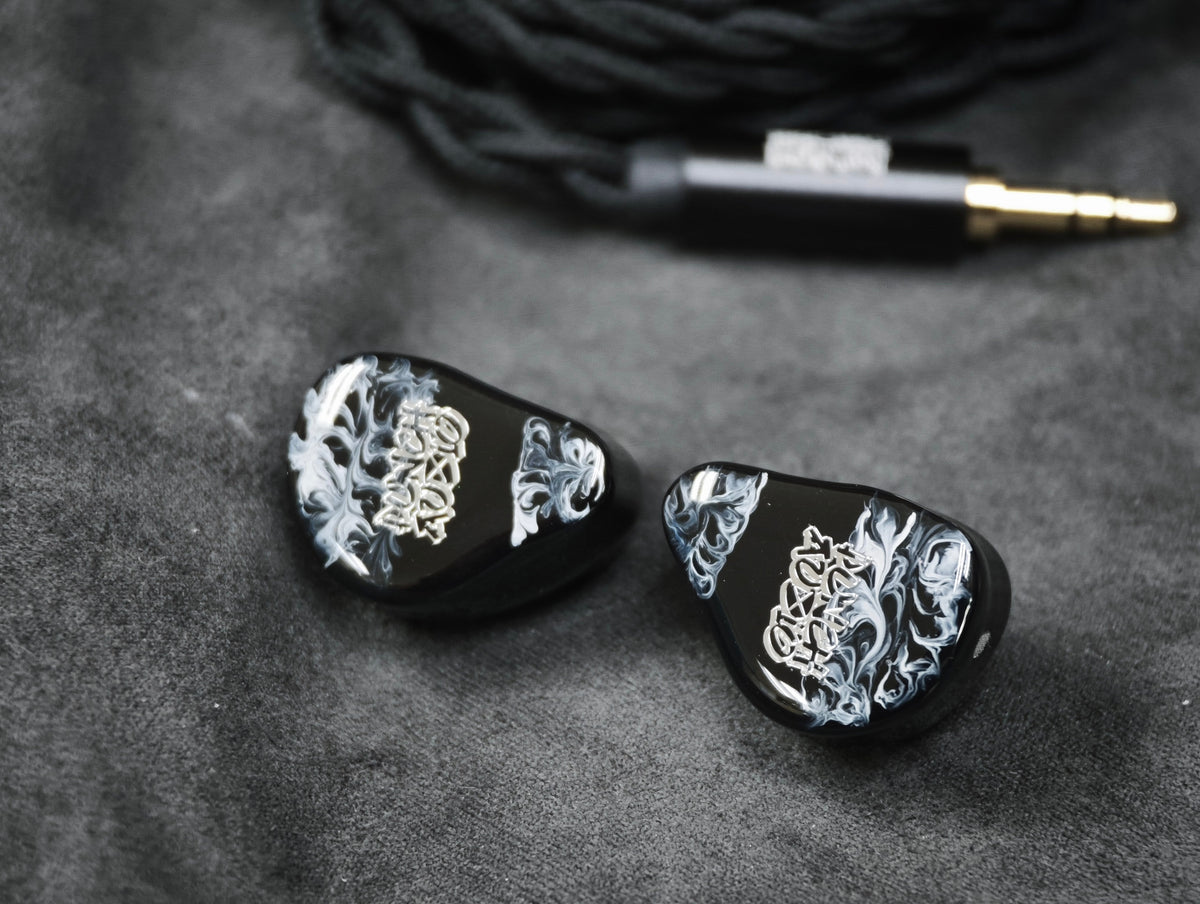
Punch Audio Patada – Bass With A Little More Manners
Review by: Yee Wei
General
Punch Audio built its name on bass, and the Patada keeps that DNA but swaps the driver recipe. The Portazo went with a dynamic driver plus dual planars. The Patada goes with a 10mm ceramic diaphragm dynamic driver and a MEMS driver for the top end.
On paper, the split makes sense. The DD handles the low-end impact Punch Audio is known for, while the MEMS is there for fast transients and treble extension. Punch Audio quotes a 14dB sub-bass shelf, and says it decays quickly so the mids stay clean. I will tell you what I actually hear below.
Build
The ceramic diaphragm is light but rigid, which in theory helps the driver start and stop quickly and keeps the bass under control. It is paired with a dual-magnet, dual-cavity design to push more magnetic force and manage airflow inside the shell.
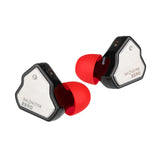
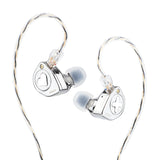
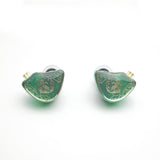
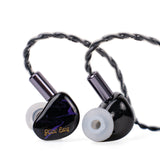
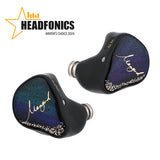
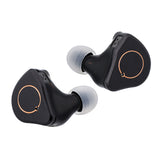
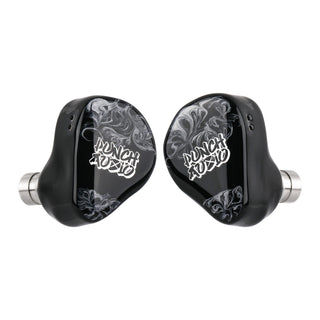
I really like the shells. They feel solid, no complaints on the build, and the design is pretty appealing to me.

Comfort
Universal fit, and six pairs of silicone tips in three sizes are included. Shell ergonomics are fine to my ears, and I could wear them for multi-hour sessions without any issue. Isolation is good with the right eartips. One thing though. The nozzle is a little short based on my experience, so I needed to do some tip rolling to get a proper seal. Your experience might vary, as everyone has different ear anatomy. Do spend time on this, because a poor seal bleeds away the sub-bass and shifts the whole tonal balance.
Specifications
- Drivers: 1DD (10mm ceramic diaphragm) + 1 MEMS
- Impedance: 20Ω @1kHz
- Sensitivity: 104dB @1kHz
- Frequency response: 20Hz–45kHz
- THD: 0.16% @1kHz
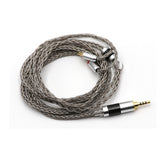
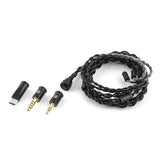
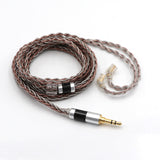
- Termination: 3.5mm
Gears Used for This Review
- Aune S18 Evo DAC
- Aune S17 Pro Amp
- Burson Conductor Stellar
- FiiO M33 R2R
- xDuoo Link3
- FiiO K17 R2R
- Laiv Crescendo Verse
Foreword
My review is solely based on what I hear via my equipment and I never consider my reviews to be objective in any way rather a subjective approach. Do take into consideration that everyone's ear anatomy is not the same, so the psychoacoustics perception might be different as well, but i believe it will not stray too far.
Sound Impression
The Patada is a bass-forward IEM, no surprise there. But it reads as a more balanced take on the Punch Audio sound than the spec sheet suggests. The low end stays prominent, the mids keep their body, and the MEMS treble is detailed yet not offensive. Don't get me wrong, it is still a heavily charged bass IEM. I would just call it the more refined sibling.
That balance makes it more adaptable across genres than a typical basshead set with recessed mids and a spicy top end.
The review was done after approximately 40 hours on my burn-in rig. I noticed the bass has slightly better control as well as slightly refined treble compared to when it was straight out of the box.The big question with any DD + MEMS hybrid is the handoff. Does the bass feel disconnected from the mids, or the treble detached from everything else? Here the transition is mostly coherent.
Bass
- Deep and rumbly sub-bass. That 14dB shelf is not decoration, you feel it.
- Billie Eilish – Bad Guy and Daft Punk both get the rumble and physical slam that they are meant to have.
- Mid-bass weight is convincing, and bass guitar and kick drums still hold their shape instead of melting into one mass.
- Kick drums have a distinct leading edge, not just warmth added to the whole recording.
- It doesn't swallow the mids to the point of burying vocals, but I would be lying if I said it is spotless. The low end gets slightly bloated at times, enough to cost some clarity on busy tracks.
- If you want a neutral reference tuning, look elsewhere. This is a deliberate tonal choice and you cannot ignore it.
Mids
- Reasonably natural for a set with this much bass underneath.
- There is some warmth leaking up from the bass, but it doesn't consistently thicken vocals.
- Male vocals keep their chesty weight. Zhao Peng 赵鹏 sounds full, and picture the singer a few steps in front of you.
- Female vocals are the weak spot. Faye Wong 王菲 lacks a bit of clarity and presence, and the bass emphasis ends up being too much for her.
- Rock and pop benefit from the added weight. Acoustic and female vocal-focused tracks, not so much.
Treble
- The MEMS driver is the most distinctive part of the setup. The 45kHz figure is a spec on paper, not proof of audible detail, so take it with a pinch of salt.
- In practice, the treble is smooth, natural and detailed yet not offensive. No splashy cymbals, no harshness on less forgiving recordings.
- It keeps a sense of openness and air.
- The trade-off is for treble heads. If you like sparkle, you will want more energy up there.
- Fit and tip choice shift the treble balance noticeably, so tip roll before judging.
Soundstage / Imaging
- Quite small stage, and depth is limited, a bit 2D-ish.
- Imaging is okay, but not best in class for the price.
- Detail retrieval and dynamics are engaging for $135. Technical performance is just not where the Patada earns its keep.
- Between the slightly bloated bass and the very smooth treble, resolution is held back a little. MEMS in the spec does not guarantee superior resolution.
Driveability
- Dongles / phone: Plenty of volume, and the sound signature stays intact.
- Desktop stack: A cleaner source tightens the low end a bit, but the character does not change.
- Entry level or mid range dongle will do just fine, but a proper source will get a bit more control out of the bass.
Comparison
vs ZiiGaat x Z Reviews Thunder ($139)
Both are bass-first IEMs at almost the same money, but they get there differently. The Thunder is a single 10mm DLC dynamic driver. The Patada pairs a ceramic diaphragm DD with a MEMS driver up top.
Build / ergonomics: The Thunder is the easier one to live with. The shells are small, light and sit flush, with no driver flex or pressure build up, and the right tips seat it nicely without fuss. The Patada has solid feeling shells and is comfortable for multi-hour sessions too, but the short nozzle meant I needed tip rolling. The Thunder also comes with a modular cable with 3.5mm and 4.4mm plugs, while the Patada is 3.5mm only. Clear win for the Thunder.
Bass: The Thunder has the bigger quantity. The 16dB shelf gives a thick, round, bouncy rumble with a slight lingering decay, a proper "big speaker" feel. The Patada's 14dB shelf is still deep and forceful, with kick drums that have a more distinct leading edge, but it can get slightly bloated on busy tracks and costs some definition. The Thunder is the more physical of the two, the Patada is the more articulate on simpler tracks.
Mids: Male vocals are strong on both, and the Thunder has the edge in chesty weight, with Zhao Peng sitting 3-4 steps in front of you. Female vocals are smooth and sweet on the Thunder, with a tinge of density. On the Patada, Faye Wong 王菲 lacks some clarity and presence because the bass emphasis gets in the way. The Thunder handles this better.
Treble: The Patada wins here. The MEMS treble is smooth and detailed yet not offensive, and it keeps a sense of openness. The Thunder is safer and a tinge darker, with cymbals lacking shimmer and not much air up top.
Soundstage / technicalities: Neither is a technical champion. Both stages are small and 2D-ish, the Thunder intimate and in your head, the Patada small with limited depth. The Patada has the slightly better detail retrieval for the price, while the Thunder's layers get compressed on dense tracks like Hans Zimmer's Why So Serious.
Verdict: The Patada is the better pick for treble clarity and detail. But I would personally go for the Thunder. It is easier to fit, the 4.4mm option matters for my chain, the vocals are better handled, and the added bass quantity is more fun for rock, metal, streaming and casual gaming. If you want a smoother, more open top end and do not mind tip rolling and 3.5mm, the Patada is the one.
Final Thoughts
The Patada is a basshead IEM that has learned some manners. The sub-bass is deep and rumbly, the treble is detailed without being offensive, and the shells are comfortable and well built. It is not a technical standout as it never intends to be one. The short nozzle and 3.5mm only cable are the other small letdowns in my opinion but not a major drawback that will deters you from buying this IEM
But for rock, hip-hop, pop and EDM listeners who want rhythmic drive, full bodied bass lines and weight to the drums, it does the job well for the asking price. If you prioritise a neutral tuning, minimal bass coloration or an analytical treble, this is not the one for you.

The Patada was sent over by Linsoul for the purpose of this review. Big thanks to the team for the support and opportunity as always.
Head over to their store if you are interested in getting a pair:
- Linsoul — Non Affiliated





Comments (0)
No comments yet.