




Tanchjim Kasier Review: Not Your Usual Tanchjim
Review by: Yee Wei
General / Packaging / Build / Comfort
The Kasier is Tanchjim's newest mid-budget hybrid at USD 129.99. It carries a 10mm DMT 5 dual-cavity dynamic driver for the lows, 2 PURE series BAs for the mids and 2 more PURE BAs for the highs, split by a 3-way crossover. Spec sheet says 16Ω and 121dB/Vrms, so on paper it is easy to drive.
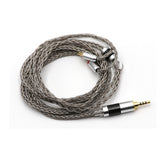
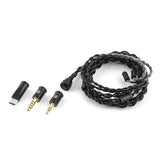
The packaging is simple and no fuss. You get the IEMs, a silver-plated copper Litz cable terminated in 4.4mm balanced, two sets of T500 eartips (bass and treble, S to L) and a white pocketable case. That's about it. No modular plugs, but at this price I won't complain. The cable itself is light, well behaved and has no kinks or memory out of the case, which is a nice step up from what Tanchjim used to bundle. It terminates in 0.78mm 2-pin at the IEM end, so cable rollers still have a way out.
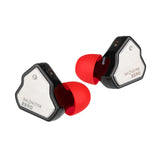
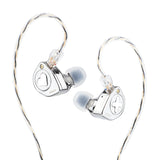
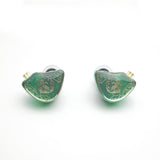
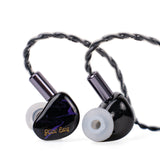
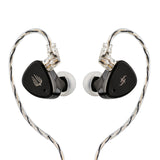
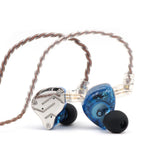
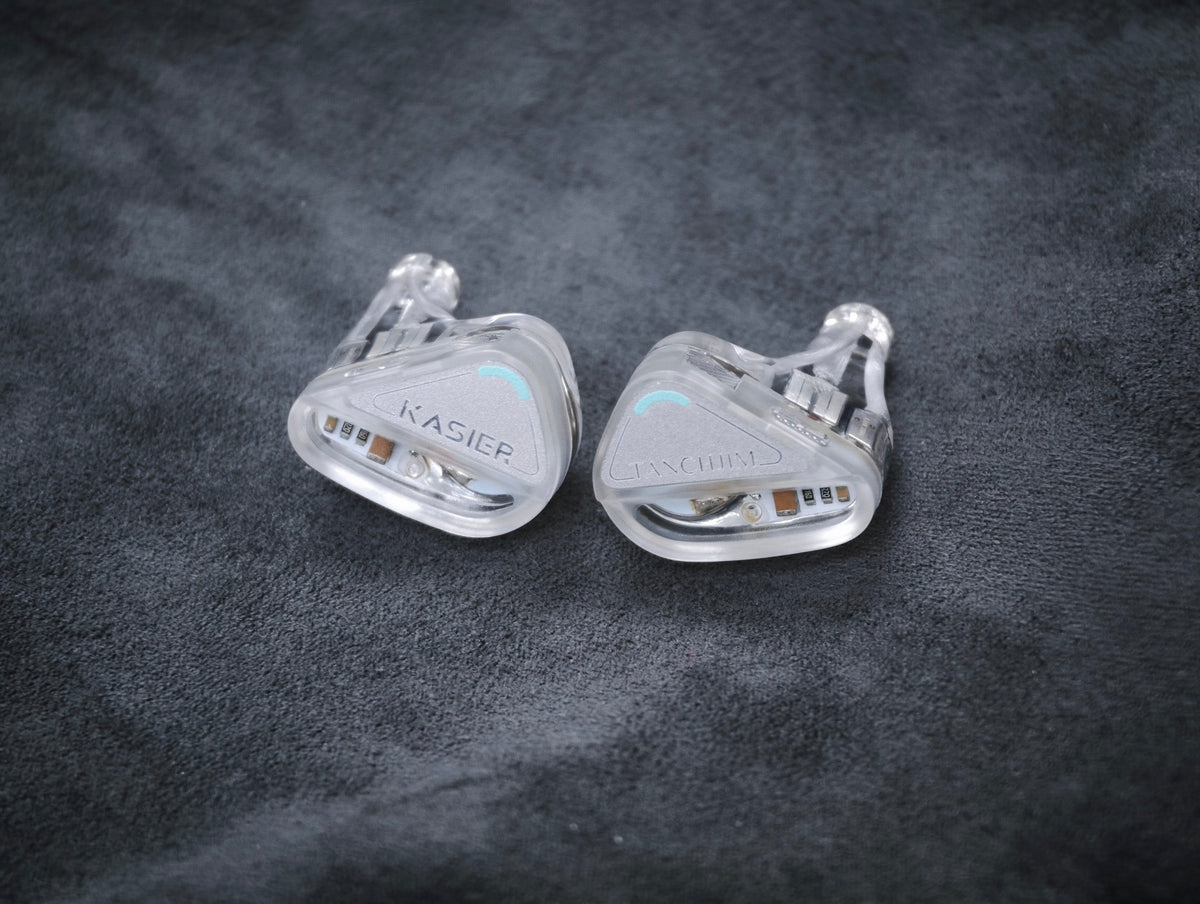
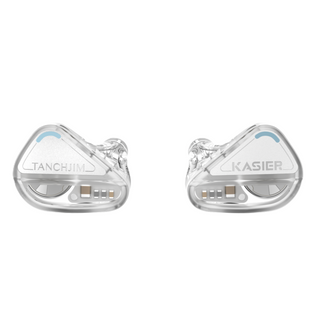
The shell is a transparent DLP-printed resin, and the design language follows the Kara. Faceplate is silver-toned with a subtle blue accent, and you can see the crossover board through the window. Faceplate looks slightly budget up close, but the build is clean and well vented, with no driver flex whatsoever.
Comfort is great. The shells are medium sized and light, and I had no hot spots even after long sessions. The nozzle is a little larger, so smaller ears may need to drop a tip size. Isolation is above average to my ears, and there is no pressure buildup or driver flex when inserting. If you are a tip-roller, this is a set worth experimenting with, since the larger nozzle takes most tips without slipping off, though the seal still changes the bass quantity quite noticeably.

Gears Used for This Review
-
Aune S18 Evo DAC
-
Aune S17 Pro Amp
-
Burson Conductor Stellar
-
FiiO M33 R2R
-
xDuoo Link3
-
FiiO K17 R2R
-
Laiv Crescendo Verse
Foreword
My review is solely based on what I hear via my equipment and I never consider my reviews to be objective in any way rather a subjective approach. Do take into consideration that everyone's ear anatomy is not the same, so the psychoacoustics perception might be different as well, but i believe it will not stray too far.
Sound Impression
If you have heard a few Tanchjim sets, you know the house sound. Neutral, a little bright, clean and a bit clinical. The Kasier steps away from that, and honestly, in a good way. Tanchjim tuned it against the B&K 5128 and the in-room target, and you can hear it. The treble is smoother, the bass has more body, and the whole thing is simply more fun to listen to. Still neutral at its core, with a slight hint of warmth in the lower end and a tinge of sparkle up top. I would call it funalytical.
I put approximately 40 hours on the burn-in rig before the proper listening. The treble settled slightly and the bass became a bit more controlled, nothing dramatic. Out of the box it is already good, so if you are impatient, you won't be missing much. Overall tonality sits at neutral warm in the low end and neutral bright up top, with the mids kept honest in between. This is a set that tries to please both the critical listener and the casual one, and it mostly pulls it off.
Bass
-
Bass is the surprise here. Enjoyable is the word. The DMT 5 dynamic driver hits with a tight, fast attack and a short, clean decay, so it gives you impact without hanging around.
-
Sub-bass has decent rumble and extension. Billie Eilish's Bad Guy shows the low notes with a nice physical touch. It will not shake your skull like a basshead set, but it goes deep enough to feel the vibration.
-
Mid-bass is punchy and well controlled. Kick drums have good thump and density, and the Slipknot Duality drum assault stays tidy with every strike separated.
-
It doesn't bleed into the mids at all. Zero smearing, vocals stay clean on top of the bass line.
-
Texture is good for the asking price. Bass guitar has enough sustain and groove, though a touch more warmth would make it even more organic. Purely nitpicking.
Mids
-
Clean and natural. Mids are not recessed, and the BA pair handles this region with a lot of confidence. Timbre is refined with no weird metallic tinge.
-
Vocal positioning is wide and close, but not shoved in your face. Picture the artist as 3-4 steps in front of you, with a clear gap from the instruments behind.
-
Female vocals are the highlight. Faye Wong 王菲 sounds clean, sweet enough and well textured. Upper mids carry good energy and it can get a little lively at higher volume, but it never gets shouty on my tracks.
-
Male vocals have good weight, though the very low baritones are a little leaner. Zhao Peng 赵鹏 has the chesty weight, just not the full bloom you get from a warmer set. A warm source fixes that quickly.
-
Instruments are well separated. Piano has a clear, direct attack, guitar strings have a good bite and cello holds its tone nicely.
Treble
-
Treble is smooth and refined. This is the biggest departure from older Tanchjim sets. The brightness has been polished, and the result is airy and sparkly without being sharp.
-
Low treble gives good presence and detail. Mid-treble is more rounded, with cymbals sounding natural and not splashy. Upper treble adds air and sparkle for the stage.
-
Sibilance control is excellent. Across my vocal tracks, s and t consonants stay smooth. Zero harshness, even on long sessions.
-
Detail retrieval is good for the price. Hans Zimmer's Why So Serious comes through with the layers intact. Super complex tracks will find the ceiling, but it hits that ceiling gracefully.
Soundstage / Imaging
-
Soundstage is where I did not expect to be impressed. Width is good, and the stage sounds out of head. It doesn't feel like the music is trapped inside your skull.
-
Depth is just average, so the stage leans wider than deeper. Hall like effect, no, but it is open and comfortable.
-
Imaging is above average. Placement is accurate, and you can tell where each performer is. YungBlud's Zombie live shows the crowd and the band with decent separation.
-
Layering is decent with 3-4 rows. Complex passages can get a little crowded, but direction stays solid.
-
Instrument separation is solid for the tier. Vocals and instruments keep their own space, and only on poorly mastered tracks does it start to struggle a little. Purely nitpicking, but a touch more depth would make the stage feel properly 3D.

Driveability
-
FiiO M33 R2R: The R2R flavour adds a slight warmth and smooths the lower mids. Male vocals gain more weight, and this is the pairing I enjoyed most for long sessions.
-
Aune S18 Evo + S17 Pro: The cleanest and most neutral presentation. You get the intended tuning, with the best detail retrieval and a pitch black background.
-
xDuoo Link3: Easy and enjoyable. Dongle level output is enough to run the Kasier properly, only the stage shrinks slightly.
-
FiiO K17 R2R: Fuller body and a more relaxed treble. This one is the all-rounder pairing.
Entry level or mid range dongle will do just fine, but a proper source will get more out of it. The Kasier scales a little, not dramatically. Reported sensitivity is 121dB/Vrms at 16Ω, but it doesn't sound like a set that wants silly amounts of power. That said, I did find myself nudging the volume up slightly compared to other hybrids, so a source with a bit of headroom doesn't hurt. Tip rolling matters too. The T500 treble tips give the brighter, airier take, and the bass tips add more body.

Comparison
Dita Prelude (USD 159)
Build first. The Prelude is a CNC-machined 3-piece 6061 aluminium shell, and it is a gorgeous bit of metalwork at this price. The Kasier's resin shell is lighter and more comfortable for long sessions, and the transparent design is cool to look at, but Dita wins on pure craftsmanship. The Prelude also ships with the ANTE dongle DAC, which is a nice extra, while the Kasier gives you a fixed 4.4mm cable with a better terminated plug for balanced sources. The Prelude cable is a 3.5mm single-ended non-interchangeable plug, so that is a point to Tanchjim for me.
On sound, the Prelude is a single dynamic driver with a mild V-shaped tuning and a technical focus, based on the Truth driver, now with dual magnets. The Kasier is smoother and more musical, while the Prelude is crisper and more sparkly up top, leaning toward detail. Bass on the Prelude is clean, quick and non-intrusive. The Kasier has more weight and impact, and I found it more enjoyable. In the mids, the Prelude is clear and forward, while the Kasier is more natural with better body on the vocals. Treble on the Prelude can have a little more bite, whereas the Kasier is more relaxed and easier for long sessions. For soundstage, both sound open, but the Kasier's out of head perception feels a bit more spacious to my ears.
I would personally go for the Kasier. The bass is more fun, the treble is easier on the ears, and the staging feels more relaxed. If you love metal build, want a dongle in the box and prefer a crisper, more technical presentation, the Prelude is the better choice for you.
Final Thoughts
Tanchjim has been the neutral, slightly bright brand for years, and the Kasier is the first one in a while that made me smile within the first few songs. Bass is enjoyable, the treble is smooth, and the soundstage doesn't sound like it's sitting inside your head. It is not a flagship killer, the detail retrieval and depth are good rather than great, and the upper mids can get a little lively when you push the volume. But for the asking price, it does everything right, and the package adds up well.
The Tanchjim Kasier was sent over by Tanchjim for the purpose of this review. Big thanks to the team for the support and opportunity as always.
Head over to their Partner's store if you are interested in getting a pair:
-
Linsoul — Non Affiliated

Shop this story




Comments (0)
No comments yet.