


Read EST in its context
In IEMs, EST drivers usually work as tweeters. Some use EST tweeters alongside dynamic and balanced-armature drivers; inspect the model description for the exact device.
 7HZ x Crinacle Zero: 2Dynamic Driver
From $24.99 USD
7HZ x Crinacle Zero: 2Dynamic Driver
From $24.99 USD
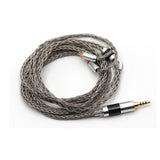 Tripowin ZonieAudio Cable
From $11.47 USD
Tripowin ZonieAudio Cable
From $11.47 USD
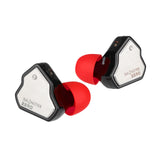 7HZ Salnotes ZeroDynamic Driver
From $20.99 USD
7HZ Salnotes ZeroDynamic Driver
From $20.99 USD
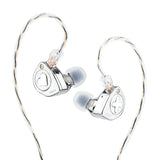 SIMGOT EW300Dynamic Driver + Planar + Piezoelectric
From $79.99 USD
SIMGOT EW300Dynamic Driver + Planar + Piezoelectric
From $79.99 USD
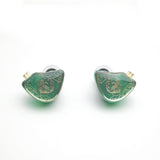 TANGZU Wan'er S.GDynamic Driver
From $19.00 USD
TANGZU Wan'er S.GDynamic Driver
From $19.00 USD
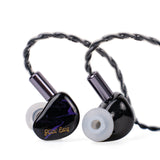 Kiwi Ears CadenzaDynamic Driver
$34.99 USD
Kiwi Ears CadenzaDynamic Driver
$34.99 USD
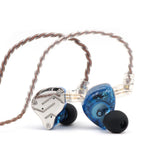 KZ ZS10 ProDynamic Driver + Balanced Armature
From $49.99 USD
KZ ZS10 ProDynamic Driver + Balanced Armature
From $49.99 USD
 SIMGOT EM6LDynamic Driver + Balanced Armature
$124.99 USD
SIMGOT EM6LDynamic Driver + Balanced Armature
$124.99 USD
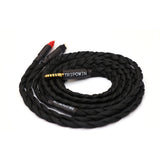 Tripowin GranViaAudio Cable
From $36.75 USD
Tripowin GranViaAudio Cable
From $36.75 USD
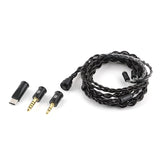 Kiwi Ears x B_Media: TerrasAudio Cable
From $45.99 USD
Kiwi Ears x B_Media: TerrasAudio Cable
From $45.99 USD
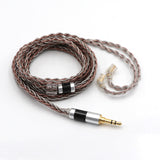 Tripowin C8Audio Cable
From $16.65 USD
Tripowin C8Audio Cable
From $16.65 USD
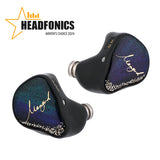 XENNS Mangird Tea PRODynamic Driver + Balanced Armature
$359.00 USD
XENNS Mangird Tea PRODynamic Driver + Balanced Armature
$359.00 USD
 7HZ TimelessPlanar
$199.99 USD
7HZ TimelessPlanar
$199.99 USD
 SIMGOT SuperMix 4Dynamic Driver + Balanced Armature + Planar + Piezoelectric
$169.99 USD
SIMGOT SuperMix 4Dynamic Driver + Balanced Armature + Planar + Piezoelectric
$169.99 USD
Understand the electrostatic principle and the EST-labelled IEM designs we carry. Keep compact IEM tweeters separate from full-size electrostatic headphone systems.
Includes products containing this technology, whether used alone or in a multi-driver design.
Keep the technology. Refine the sound, format and price until the options fit your preferences.
The technology stays fixed. Try another price range or remove a sound, music or use preference.
Take this technology and your current preferences into the Product Finder. Every answer remains editable.
Select any technology to see how it works. Compare design advantages, typical frequency roles and starting products side by side.
| TechnologyHow it creates sound | Design advantagesPotential benefits, plus what to check | Typical frequency roleImplementation, not a response graph | Your starting pointLowest in-stock complete-product price |
|---|---|---|---|
|
DD Read guide |
|
Full-range, or bass in hybrids BassMidsTreble A dynamic driver can handle the whole mix. Multi-driver IEMs often assign it the lows. |
Loading current prices…
Read guide
|
|
BA Read guide |
|
Band-specific or full-range BassMidsTreble The chosen receiver determines its job. All-BA arrays can cover bass through treble. |
Loading current prices…
Read guide
|
|
PM Read guide |
|
Full-range, or a specialist band BassMidsTreble A full-size planar can cover the whole spectrum. A smaller element may serve only part of a hybrid. |
Loading current prices…
Read guide
|
|
ESTThis guide |
|
Treble / ultra-treble in IEMs BassMidsTreble Commonly used as a tweeter in multi-driver IEMs. Full-size electrostatic headphones are a different system. |
Loading current prices…
Read guide
|
|
MPT Read guide |
|
Upper frequencies in hybrids BassMidsTreble Designed here as an upper-range ingredient rather than the entire earphone. |
Loading current prices…
Read guide
|
|
PZT Read guide |
|
Often upper treble in IEM hybrids BassMidsTreble A common high-frequency supplement. Some designs couple the same component mechanically. |
Loading current prices…
Read guide
|
|
BC Read guide |
|
Varies with the implementation BassMidsTreble Not inherently a bass-only technology. Driver actuation and contact design determine its contribution. |
Loading current prices…
Read guide
|
|
MEMS Read guide |
|
Full-range or a tweeter role BassMidsTreble The MEMS label describes scale/manufacturing, not one fixed bandwidth or sound. |
Loading current prices…
Read guide
|
|
AMT Read guide |
|
Full-range in current earphones and headphones BassMidsTreble Known for tweeter use in loudspeakers, but not restricted to treble in these earphones and headphones. |
Loading current prices…
Read guide
|
Choose another product format to explore the available technologies.
In IEMs, EST drivers usually work as tweeters. Some use EST tweeters alongside dynamic and balanced-armature drivers; inspect the model description for the exact device.
The Conductor listing, for example, describes transformer-driven Sonion tweeters in a tribrid. That describes one implementation, not a guarantee of a Bright sound.
Use the connection and source requirements for the exact IEM or headphone. Do not attach a full-size electrostatic energizer requirement to an ordinary analog IEM.
Not necessarily. Some IEMs integrate their transformer. Follow the specific product requirements.
The final tuning determines relative treble emphasis. Use the sound filters, not the acronym alone.
The construction drawings are conceptual and not to scale. Model-specific claims belong to the linked product documentation.
Technical references checked September 2026. No frequency-response curve is generated from a technology label.
Community
Linsoul was founded in 2016 by Crazy HiFi team with the intention of providing world class customer service to the audiophile and music loving communities.
 Announcements🚀 Kiwi Ears Halcyon – World’s First MEMS Tribrid IEM Coming to Kickstarter (April 2026)
 AnnouncementsTHIEAUDIO Cypher Giveaway Ends 2 March – Don’t Miss the Kickstarter Launch!
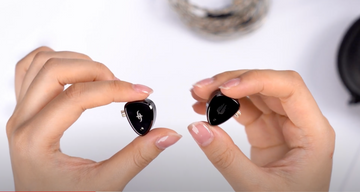 UnboxingSimgot EM6L Unboxing and Impressions
 Reviews7Hz x Crinacle Diablo Review
 GuidesHow to Wear In-Ear Monitors Correctly


