










Linsoul's House-brand debut Avant - How does the 6 driver Tribrid slot into the family??
By Andrew Barlow
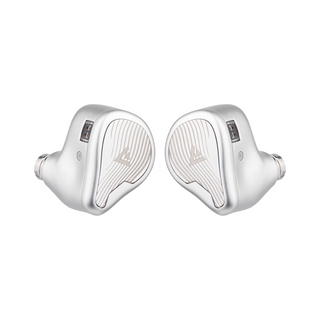
The Linsoul Avant ($369 USD) is Linsoul’s debut house-branded IEM, and it skips the warm-up act entirely by cramming a six-driver tribrid array (2DD + 3BA + 1 MEMS) into a CNC-machined aluminium shell. Instead of playing it safe with a generic Harman retread, Linsoul built a low-voltage silicon MEMS tweeter that pairs surgical transient speed with a surprisingly civilized, modern warm-neutral tuning.
Thanks heaps to Rosie at Linsoul for sending these guys out for review.
Unboxing, Accessories and Aesthetic Impressions

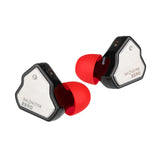
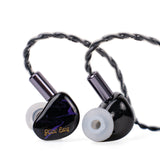
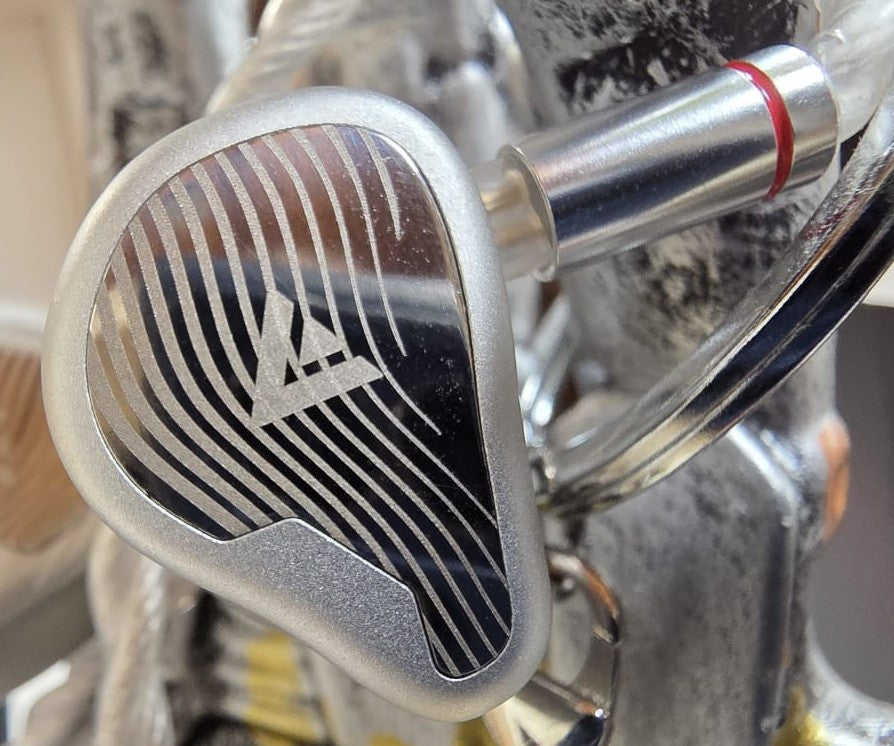
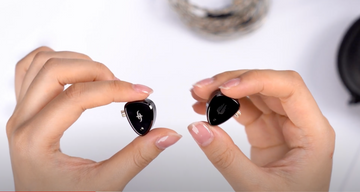
It’s a nice affair with a good array of accessories. I like the outer blue and black box. Slide the cover off and we’re staring at two lovely, premium looking, large and quite weighty boys. But they fit nicely in my ears and I’m able to get a great seal. Smaller ears may have an issue.
They come with 3 sets of tips – 3 pairs of clear, sticky silicon, 3 pairs of grey silicon and one pair of memory foam as an alternative for maximum passive isolation or a slightly warmer bass response. Also included is a set of nozzle filters.
I tried them all. I’m not normally a foamy kinda guy but these bad boys did increase the bass shelf while preserving the full midrange and detailed treble. I really liked them. But then I put the sticky clear guys in and something just gelled. I had to get the seal right but once I did, these were the party tips. Bass was deep and punchy and mids and treble were rich and full with resolution and detail out the wazoo. I stuck with these.
The catch here is a wide 6.4mm short nozzle and a shallow shell, meaning ear-tip rolling is highly recommended to get a proper acoustic seal.
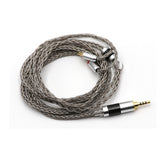
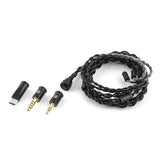
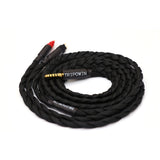
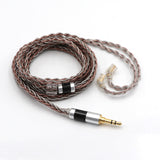
The 8.2-gram aluminium earpiece pairs with a modular 0.78mm 2-pin silver-plated cable featuring swappable 3.5mm and 4.4mm plugs. I LOVE modular cables and I believe they should be industry standard across the board. And this braided white guy has great weight without tangling or holding memory.
It also comes with a smart, premium-looking brown leather carrying case.

All in all, packaging, accessories and form are impressive.
The Architecture: Tech Flexing That Actually Works
Dual Isobaric Subwoofers. Two 10mm PET dynamic drivers sit in a dome-to-dome constant-pressure layout, acting like a tiny acoustic piston. They deliver a disciplined 9 dB sub-bass shelf focused strictly between 20 Hz and 200 Hz, giving you tactile slam without bleeding into the lower midrange.
The Midrange Engine. Two custom full-range 653011 balanced armatures handle the core instrumentation alongside a Knowles 33518 tweeter. They follow a modern JM1-style curve, which is a modern frequency response target for in-ear monitors that aims to balance neutral, lifelike midrange timbre with a smooth downward slope from bass to treble. This keeps vocals present and natural rather than shouty.
Voltage-Friendly MEMS. Traditional solid-state silicon MEMS drivers usually demand high-voltage energizers to wake up, yet Linsoul engineered this unit to run effortlessly at standard dongle voltages (12Ω impedance, 104 dB sensitivity). It fires ultra-high transients with zero metallic BA timbre and avoids the infamous 8 kHz sibilance spike.

Sonic Breakdown: Surgical Scalpel Meets Velvet Glove
Bass. Fast, textured, and strictly policed. Sub-bass drops dig deep with physical rumble, while mid-bass kicks snap and decay before muddying complex metal or electronic mixes.
Midrange. Clean and linear with a touch of lower-mid warmth. Acoustic guitars and vocals sit centre-stage with crisp 3 kHz bite, though poorly mastered tracks can expose some upper-mid energy between 4 kHz and 6 kHz.
Treble & Staging. The MEMS tweeter stretches effortlessly past 15 kHz, creating an airy, holographic soundstage with razor-sharp imaging. Micro-details like cymbal decay and room reverb pop out effortlessly without inducing listening fatigue.
For the review, I spent most of my listening on my trusty NiPO N2 Dap.
On Swedish Rockers Arkado’s new album III, A Little Too Late starts out powerful with great speed and resolution. Ess’s and T’s stay on the right side of sibilance and there’s great definition. I’m getting a genuinely good bass presence that is able to separate itself from the lower mids.
Imaging is a standout on these guys. Instruments are dispersed all around my head, with plenty of space between each one. The staging is reasonably wide laterally but also in front of me and behind. It’s not grand but it is decent.
On Swedish (again) guitar virtuoso Yngwie Malmsteen’s Far Beyond The Sun (one of my favourite instrumental pieces), the first thing I can hear is the separation of instruments. Bass guitar is nicely present and behind me, off to the right. Yngwie’s shredding is right in the middle of my head and synth is in both ears and the drums are behind me but also off to my right. Guitars are rich and natural, and transients are lightning fast here. I can hear micro details, but it never gets harsh, which is saying something because 80% of his fret work is in the high registers. There’s a ton of detail and it’s airy and spread out very well.
On Dragonforce’s new single Neverending Nightmare, with Alissa White-Gluz handling the clean and dirty vocals, there’s a cacophony of aural tumult deep into the song with three guitars, machine-gun drums and synth and the Avants can actually handle the frenetic soup with ease. They don’t get muddy or congested. In fact, I can pinpoint each instrument, despite the sheer speed and competing sounds. This is something that not a great deal of head-gear can do easily. At 5:20, things calm right down and there’s a synth-like whammy/effect sweep from Herman Li’s guitar, and it seems to effortlessly float through my head, right to left. Quite surreal.
Time for some Electronic/EDM. Ghost Rider, Phaxe and Vegas (Brazil)’s Falling (Vegas Remix). And all I can say is WOW! With all seriousness, slamability factor is off the charts!!! The bass is tight, powerful, visceral and mega-rumbly! BUT, it’s not overdone. It doesn’t detract from the rest of the song, it compliments it.
The resolution and detail - the synth and programmed drums have real attack and a clean snap without sounding like the cutlery draw is being tossed down the stairs.
The Avants are definitely tuned warm and exciting. There’s nothing boring about them.

On a vocal track, Morph The Cat by Donal Fagan, bass starts out deep and clean. This bass run is some of the best I’ve heard it on anything recently. Fagan is balanced and smooth – he’s in front of me but not ‘at me”. He sounds natural and powerful – very well offset within the mix.
Finally, on Bach’s Orchestral Suite No. 3 in D Major – No. 2 Air, I can hear every breath the oboist takes as he/she breathes in between passages. And the ensemble are spread all around me, like I’m at the recital. Clarity is simply excellent.
Head-to-Head: Linsoul Avant vs. Colorfly Lunar Roam
The Linsoul Avant and Colorfly Lunar Roam are both late-2026 multi-driver in-ear monitors priced around $370–$450 USD, yet they take completely different acoustic and engineering paths. While the Avant is a warm-neutral, fatigue-free MEMS tribrid designed for reference smoothness and transient speed, the Lunar Roam is a bold, V-shaped 1DD+6BA hybrid that prioritizes energetic upper-mids, authoritative bass, and a wide, vivid stage.
I reviewed the Lunar Roams on my YouTube channel recently and was quite impressed.
Below is a general Specifications & Pricing Comparison:
|
Feature |
Colorfly Lunar Roam |
|
|
Retail Price (USD) |
$369.00 RRP (can be discounted) |
$450.00 RRP (can be discounted) |
|
Driver Architecture |
6-Driver Tribrid (2DD + 3BA + 1MEMS): Dual 10mm PET isobaric woofers, 2 custom 653011 mids, Knowles 33518 tweeter, solid-state MEMS |
7-Driver Hybrid (1DD + 6BA): Single 10mm DLC gold-plated ball-top woofer + 6 custom balanced armatures with spiral airflow duct |
|
Impedance & Sensitivity |
12Ω / 104 dB (Voltage-efficient MEMS; runs easily off standard sources) |
16Ω / 98 dB (Easy to drive, though scales noticeably with stronger desktop amps) |
|
Shell & Cable |
CNC aluminium metal shell with mirror finish; 0.78mm 2-pin cable with swappable 3.5mm/4.4mm plugs |
Smoky transparent resin shell with CNC aluminium faceplate; MMCX cable with rocket-shaped modular 3.5mm/4.4mm plugs |
|
|
|
|
The Avant targets a warm-neutral signature with a controlled 9 dB sub-bass shelf and a smooth, non-fatiguing 3 kHz peak. In contrast, the Lunar Roam tends to lean into an energetic V-shaped profile. The Avant's all-day listenability, contrast its restrained upper midrange against the Lunar Roam's forward vocal and occasional electric guitar bite—which can sometimes turn shouty or fatiguing during loud, extended sessions.
Treble Execution (Solid-State MEMS vs. Multi-BA). The Avant delivers lightning-fast transient speed and extension without the metallic sharpness common to earlier MEMS sets. The Lunar Roam relies on six balanced armatures for a more intense, hyper-detailed treble presentation that feels immediately dramatic, whereas the Avant feels more natural and polite.
Bass Delivery (Dual Isobaric PET vs. Single DLC). The Avant pairs two 10mm PET drivers in a dome-to-dome constant-pressure setup for clean and full textured sub-bass rumble that stays disciplined and never bleeds into the mids. The Lunar Roam uses a single 10mm DLC dynamic driver with a spiral acoustic duct, yielding a bouncier, weightier mid-bass punch that gives rock and pop more slam at the expense of the Avant's more studio-like neutrality. The Avants go lower though.

The Verdict
Well, I do have to say, I have been thoroughly impressed with Linsoul’s first iem under the actual brand of Linsoul.
I got to listen to these at the StereoNET Melbourne Hifi show recently and was already impressed, but spending more time with them at home, has not only cemented my initial thoughts but enhanced them.
I genuinely can’t think of tangible negatives, cons, quirks or reasons that 90% of the audio population wouldn’t love these. Ok, they don’t stage the widest but imaging is excellent. They’re not bass canons but still provide deep slam and punch. And absolute treble-haters may find them a tad resolving, but I would be surprised if that was the case, personally.
If you want flagship transient speed and modular accessories without paying kilobuck prices, the Avant punches well above its weight. It’s exciting, well balanced with great resolution, a natural balanced midrange and great extended bass, while creating a decent soundstage and excellent pinpoint imaging within that stage.
Thanks again to Linsoul for providing these for review.
I’m also paid to write reviews for Linsoul but this does NOT change the way I write or influence my opinion in any way. Check out my other reviews – not everything I say is positive. These just happen to be a fantastic set of iems in my opinion.




Comments (0)
No comments yet.